COVID-19
Coronavirus-19
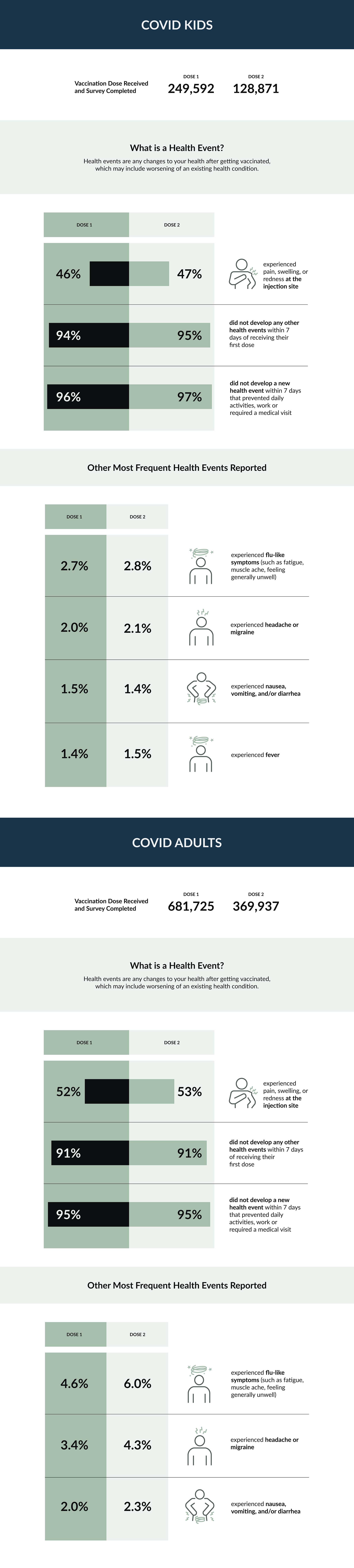
The purpose of the COVID-19 surveillance program was to find out how often health problems occur after the primary series of the COVID-19 pandemic vaccine
Location: Alberta, British Columbia, Ontario, Nova Scotia, Prince Edward Island (PEI), Quebec, and the Yukon
Study Summary
Study participants from COVID-19 vaccine naïve populations were asked to complete up to 4 online surveys after a primary series of COVID-19 vaccine (one week after each dose, and 6 months after the first dose).
COVID-19 vaccines for pregnant people
Researchers measured the safety of COVID-19 vaccines in pregnant females compared to non-pregnant and unvaccinated females across seven Canadian provinces and territories. Data from over 190,000 females showed that mRNA vaccines had a safe profile in pregnancy. Pregnant females had fewer symptoms that prevented daily activities, work or required a medical visit than non-pregnant females. There was no difference in hospitalization or pregnancy-related complication in pregnant females who were vaccinated and those who were not. These findings help inform pregnant individuals about vaccine safety and guide recommendations for their use during pregnancy. The following link will take you to the publication where you can see the study’s methodology and findings:
Research
Summaries
Canadian National Vaccine Safety Network (CANVAS) researchers monitored health events following vaccination with COVID-19 vaccines, specifically focusing on neurological events. Neurological events were health events like numbness/tingling, loss of taste or smell, vision loss, facial weakness/paralysis, seizure, weakness/paralysis of arms or legs, confusion, change in personality or behavior, or difficulty with urination or defecation.
This study involved four groups of participants that were asked to complete online surveys about health events they experienced.
1) Group 1: Participants who received 1 dose of COVID-19 vaccine
2) Group 2: Participants who received 2 doses of COVID-19 vaccine
3) Group 3: Participants who received 3 doses of COVID-19 vaccine
4) Group 4: Participants who did not receive a COVID-19 vaccine dose
Data from nearly 1.3 million COVID-19 vaccinated participants and over 15,000 unvaccinated participants were analyzed. Results from analysis indicated that neurological event occurrence was very rare. The only notable difference between vaccinated and unvaccinated participants was that vaccinated participants reported loss of smell or taste less frequently ascompared to unvaccinated individuals. In addition, there was a finding of an increase in numbness and tingling after dose 1 of the adenovirus-vector ChAdOx1 vaccine.
Overall, this study confirmed the safety of COVID-19 vaccines, particularly in relation to neurologic events.
For full details on this study, please click the following link:
Researchers examined the safety of two mRNA COVID-19 vaccines among adults aged 65 and older using data from the Canadian National Vaccine Safety Network’s (CANVAS) surveys of vaccinated and unvaccinated adults from seven provinces and territories. Researchers looked for links between the Pfizer (BNT162b2) and Moderna (mRNA-1273) COVID-19 vaccines and health problems affecting daily activities or needing medical attention, and also more serious health problems leading to emergency room visits or hospitalizations within seven days after each dose.
Between December 2020 and February 2022, over 290,000 older adults completed surveys after receiving one or more vaccine doses, while about 3,000 unvaccinated adults also participated. The rates of serious health problems following mRNA COVID-19 vaccination were very low, less than 0.3%, and were not higher compared to the unvaccinated. These findings further strengthen the evidence that mRNA COVID-19 vaccines are safe for older adults, and can help inform them about what to expect after vaccination. For full details on this study, please click the following link:
Researchers examined how COVID-19 vaccines affected adults who were previously infected with the virus. The data from the Canadian National Vaccine Safety Network (CANVAS) surveys shows those who had moderate to severe COVID-19 before getting vaccinated were more likely to have health problems requiring medical care or preventing daily activities like work. This was especially true after the first dose.
Overall, the study shows that adults with previous moderate or severe COVID-19 infection were more likely to have a health problem in the week following each vaccine dose. For further details on this study, please click the following link:
After emergency approval, COVID-19 vaccines required ongoing safety monitoring. The Canadian National Vaccine Safety Network (CANVAS) monitored COVID-19 vaccine safety across diverse groups like those living with auto-immune diseases, pregnant and breastfeeding individuals, children and older adults. Participants responded to an online survey after they get vaccinated and again 6 months later. The following link will take you to the publication explaining in-depth the methodology of the CANVAS COVID-19 study:
As with any events reports, not all symptoms reported may be caused by the vaccine. They may be coincidental and/or due to other causes.